About
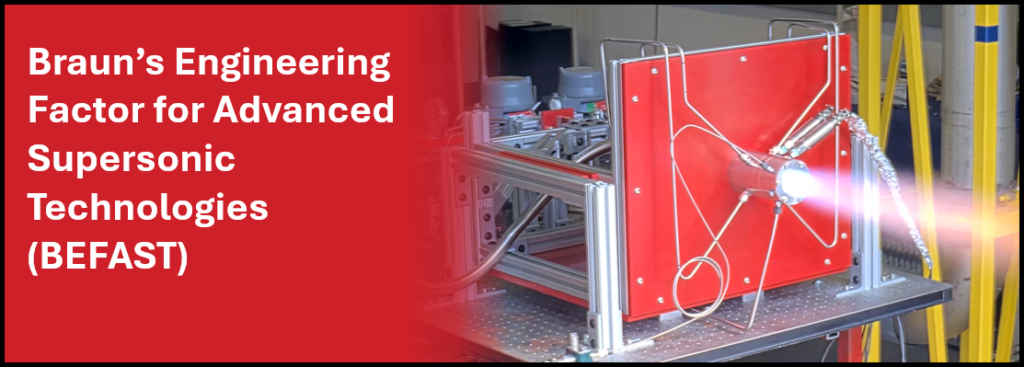
Started in 2023 by Dr. James Braun at North Carolina State University, the BEFAST Lab (Braun’s Engineering Factory for Advanced Supersonic Technologies) advances research in supersonic propulsion and energy systems through a combination of computational modeling and experimental investigations. Since its establishment, BEFAST has grown into a multidisciplinary research team with extensive computational and experimental capabilities. The lab’s research has resulted in numerous journal publications, conference papers, and contributions to next-generation propulsion and energy technologies.
Spotlight Post

Pictured: BEFAST student Kierra Shook scuba diving with astronaut and NC State Alumni Christina Koch. This was taken during her time as a NASA pathways intern at the Neutral Buoyancy Lab at Johnson Space Center in Houston, TX. Go Pack!

Research Highlights
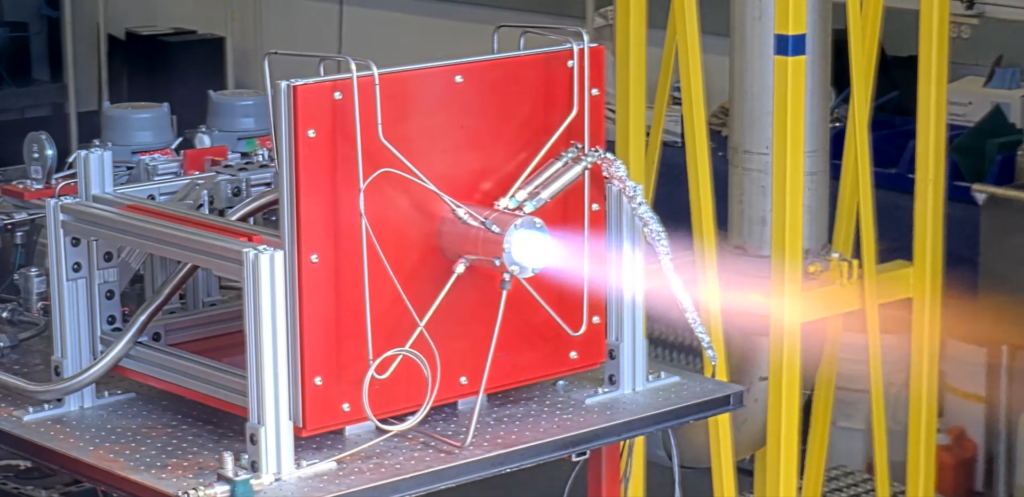
Rotating Detonation Engines (RDEs) and Rotating Detonation Rocket Engines (RDREs) are novel types of high speed propulsion. RDEs and RDREs are combustors that utilize the pressure rise across a continuous detonation wave to increase the stagnation pressure of the system. This results in higher energy output compared to a traditional deflagrative combustor while also being more compact in design.
Currently, our computational team rapidly changes designs to improve overall system performance. They also investigate and develop tools to improve our understanding of these engines. Our experimental team works to validate the numerical models and provide insight through 1 to 1 campaigns in the lab space.
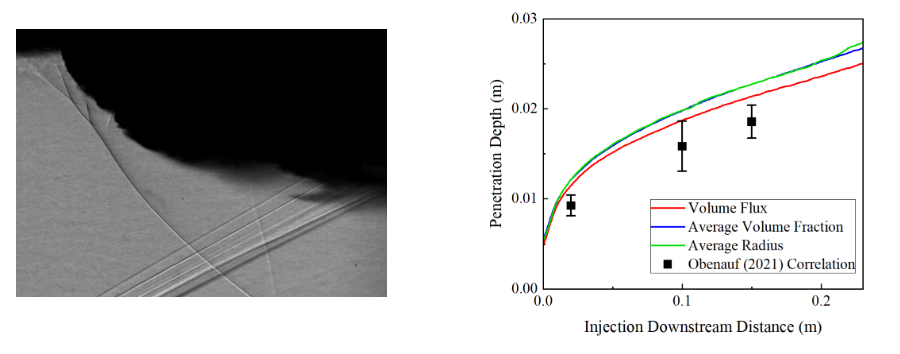
Liquid based combustion is sought after as liquid propellants have a higher energy density than their gaseous counterparts, making them more thermally efficient and easier to store. Accurately modeling the breakup of liquid injections is important to understand the physics of primary/secondary breakup, evaporation, and mixing present in combustion engines.
Currently, multiphase simulations are undergoing to model the primary and secondary breakup of liquid fuel in the combustion chamber, capturing both steady and unsteady crossflow driven breakup. Experimentally, the subsonic and supersonic wind tunnels are used to generate a constant crossflow with a liquid injection to identify breakup under these conditions. Both the computational and experimental teams work together to create and validate the multiphase models to accurately quantify liquid breakup.
Traditional turbines use constant airflow through a rotor to spin a shaft and generate electricity. For supersonic applications, the flow must be slowed down to allow the turbine to operate properly without shocks. Instead, a ‘wavy-walled’ design can be implemented to harness the energy of the supersonic flow. A helical geometry allows shocks to form on the body which create a force, and the helical design turns the system around a shaft. This process allows energy to be captured from a constant supersonic flow.
Currently, computational efforts are investigating the design of the helical geometry to optimize the power that can be extracted from the system. Experimentally, these designs are being tested in the supersonic wind tunnel to validate the computational models.

Partnered Organizations and Universities